FMCSA Complete Roster Reveals Scope of Emergency CDL School Crackdown and Immediate Shutdowns

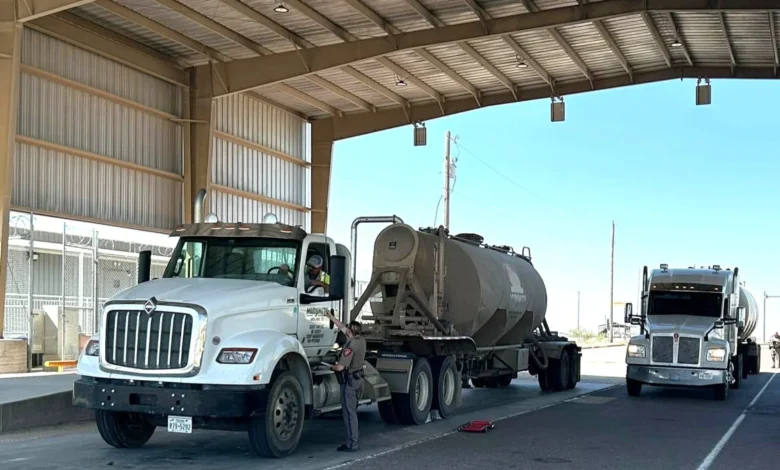
The Federal Motor Carrier Safety Administration (FMCSA) recently sent shockwaves through the commercial transportation and logistics sector by executing a sweeping, emergency crackdown targeting entry-level driver training (ELDT) providers across the United States. Following initial announcements that roughly 110 commercial driver’s license (CDL) training schools had been hit with immediate shutdowns, a newly reviewed and fully reconstructed roster sheds comprehensive light on the enforcement action. The detailed ledger uncovers 111 distinct entries spanning 20 states, active online platforms, and multiple operations whose physical footprints were logged as inactive or altogether unknown.
The enforcement sweep, which officially took effect on August 31, was designed to act as an immediate deterrent against substandard training practices that federal regulators argue directly compromise highway safety. For the thousands of students currently navigating the licensing process, and for motor carriers relying on a steady stream of qualified professional drivers, understanding the exact parameters, geography, and rationale behind this federal crackdown is critical to maintaining operational compliance.
An Anatomy of the August 31 Emergency Action
Under the terms of the FMCSA’s August 31 directive, all affected commercial driver training providers were ordered to cease operations instantly. This severe regulatory penalty strips institutions of their authorization to function as registered ELDT providers. Consequently, sanctioned schools are explicitly prohibited from administering the FMCSA’s standardized entry-level driver training curriculum, utilizing physical facilities or instructional vehicles for hands-on learning, conducting behind-the-wheel coaching, enrolling prospective students, or submitting graduation and training certifications via the agency’s centralized Training Provider Registry (TPR).
While Transportation Secretary Sean Duffy initially framed the emergency shutdown around a benchmark of 110 CDL schools, and formal preliminary announcements cited “more than 110” providers, the finalized roster presents a precise total of 111 entries. Industry analysts point out that this minor numerical discrepancy is easily explained by the structural methodology of the list itself. Rather than cataloging distinct corporate entities, the roster is systematically organized by the specific locations where training was physically or digitally conducted.
As a result, several multifaceted or multi-state corporate entities appear across multiple jurisdictions. For instance, American Trucking LLC is documented in both Florida and the digital space, while United CDL operations appear in both Maryland and West Virginia. Similarly, corporate names such as California Truck Driving School, KMT Logistics, OSSO Corp., and West Coast Truck School are cataloged across multiple states, including California and Utah. Additional listings are scattered among purely online categories or designated as inactive. Out of the 111 total entries, 84 are tied to physical locations across 20 distinct states, 23 represent online operations, and four are classified as inactive entities where a specific state was not identified.
Geographic Concentration and State-by-State Breakdown
A closer examination of the geographic distribution reveals that the crackdown heavily concentrated on a handful of states with high volumes of commercial traffic and driver testing infrastructure. Texas and Pennsylvania share the dubious honor of leading the physical-location entries, with 13 flagged providers apiece. California closely followed with 11 targeted schools, Florida recorded 10, and Utah accounted for nine. Combined, these five states represent 56 of the 84 state-based entries—accounting for precisely two-thirds of all physical locations hit by the emergency closure order.
To provide a comprehensive overview of the affected regions, the reconstructed FMCSA emergency roster breaks down by state as follows:
- Arizona (2 entries): ANET TRANSPORT LLC, State 44 Transport
- California (11 entries): A2Z Truck Driving School Inc., California Truck Driving School, Diamond Truck Driving School, Dynasty Trucking School Inc., Go4CDL LLC, International Truck Driving School, Junan Truck Driving School, KMT Logistics LLC, OSSO Corp., Truckmaster CDL School, West Coast Truck School Inc.
- Colorado (1 entry): Colorado Trucking College, LLC
- Florida (10 entries): RoadPro CDL Training, A1 CDL LLC, American Trucking, LLC, CDL Technical & Motorcycle, CDL Training of Tampa LLC, East USA CDL Academy, Florida CDL Truck Driving School, FTS, Metropolitan Trucking & Technical Institute, Soler & Soler CDL School Corp
- Idaho (1 entry): Intercheck Driving Service LLC
- Maryland (1 entry): United CDL
- New Jersey (3 entries): EZ Wheels Driving School, Punjabi School of CDL Inc., Start CDL Inc.
- New Mexico (1 entry): Prime Time CDL
- New York (3 entries): J&S Reliance Driving School, Red Hook Commercial Driving School Inc., US Mule CDL Driving School
- North Carolina (1 entry): CL Driving School
- Ohio (7 entries): A1 CDL Training LLP, AB5 CDL Trans, AK CDL Trucking Trans, Hebron Trucking LLC, Prime CDL Training Center LLC, Troy CDL School LLC, Trucktrailerpro CDL School LLC
- Oregon (1 entry): I&H Truck Inc.
- Pennsylvania (13 entries): A Boss Trucking Inc., CDL Lab, CDL Training, Diversity Freight Lines Inc., Driveline Carrier Inc., GE CDL Inc., Highway Truckers Inc., Hot CDL Training, Jorgo Trans LLC, N-Trans Inc., Penn CDL LLC, Western Area Career & Technology Center, X-Trans Inc.
- South Carolina (1 entry): Freighter LLC
- Texas (13 entries): ASC Technical Institute LLC, Asere Transport, Brothers CDL Training LLC, CDL Aris Truck LLC, CDL Commercial Trucks Training LLC, Cultural Technical Institute, LLC, EP Texas Trucking School, Mountain View Vocational Institute LLC, MT Training Center, LLC, One Stop CDL Driver Training LLC, Prime Time CDL, Sun City CDL, LLC, Tony CDL Training
- Utah (9 entries): Behind the Wheel Truck Driving School, California Truck Driving School, CDL Services, LLC, KMT Logistics LLC, OSSO Corp., PR Best Truck Driving School LLC, Rocky Mountain CDL, Utah CDL Inc., West Coast Truck School Inc.
- Virginia (1 entry): CDL Safe Driving Academy LLC
- Washington (1 entry): Fifth Wheel Commercial Driving School Inc.
- West Virginia (1 entry): United CDL
- Wisconsin (3 entries): CDL Pro School, On Your Way CDL Training, Tez CDL School LLC
- Online Operations (23 entries): American Trucking LLC, Anet Transport LLC, CDL Commercial Trucks Training LLC, CDL Compass, CDL Direct, CDL Express Inc., CDL Lab, CDLELDTPREP, Colorado Trucking College LLC, Driving-Tests.org, ELDT Direct, ELDT.com ($25 ELDT Solution), ELDTchimp.com, Florida CDL Truck Driving School, Freighter LLC, Luma Brighter Learning, NHSA, SaferELDT LLC, SaferTraining, Start CDL Inc., The CDL Expert, Trucktrailerpro CDL School LLC, US Mule CDL Driving School
- Unknown / Inactive (4 entries): Behind the Wheel Truck Driving School, California Truck Driving School, Freighter LLC, West Coast Truck School Inc.
The Trigger: English Proficiency Violations and Massive Scale
The scale of the crackdown raises critical questions regarding how the FMCSA targeted these specific entities. According to regulatory officials, the schools were identified through a rigorous data-matching process that cross-referenced active Training Provider Registry records with roadside inspection data. Specifically, federal investigators homed in on commercial drivers who were formally cited for failing to meet federal English-language proficiency requirements—a vital safety standard mandated for all commercial vehicle operators navigating U.S. interstate commerce.
The threshold for intervention was severe. Every single school chosen for emergency removal had certified at least 10 individual drivers who were subsequently pulled over and cited by roadside safety inspectors for failing English proficiency standards. Collectively, the 111 targeted providers were found to have rubber-stamped and certified more than 5,000 such drivers. Regulators argue that pushing thousands of unqualified or non-compliant operators onto public highways poses an immediate, catastrophic hazard to the traveling public, thereby justifying the extraordinary step of an unannounced emergency shutdown rather than standard, drawn-out administrative hearings.
Emergency Removals Versus Proposed Removals
To fully grasp the mechanics of federal motor carrier oversight, logistics professionals and legal experts emphasize that the 111-entry emergency roster must not be conflated with a completely separate category of schools facing administrative scrutiny: those issued notices of proposed removal.
An emergency removal takes effect instantly. Under established FMCSA regulations, the agency possesses the statutory authority to purge a provider from the registry without issuing a prior warning notice if it determines that the school’s continued operation presents an "imminent hazard" or a substantial likelihood of resulting in death or serious injury. While affected schools retain the right to seek administrative review, the emergency order remains entirely in force unless it is officially stayed or reversed by legal or regulatory channels.
By contrast, a notice of proposed removal serves as the initiation of a formal administrative review process. Institutions receiving these notices are legally mandated to inform current and scheduled students of the pending action, but the notice itself does not trigger an immediate closure. Instead, the provider is given a designated window to submit a comprehensive corrective-action plan or request administrative review under standard Training Provider Registry protocols.
These proposed-removal actions stem from an intensive summer sweep conducted in July, which involved roughly 400 separate investigations executed by 175 federal and state investigators spanning 40 states. During these exhaustive audits, investigators uncovered systemic deficiencies, including instructors lacking required professional certifications, training ranges and facilities far too small to safely practice mandatory driving maneuvers, missing or falsified training and assessment records, and inadequate classroom facilities. Most alarmingly, FMCSA data indicates that drivers certified by this broader group of more than 160 providers under review have been linked to 239 commercial motor vehicle-related fatalities.
It is worth noting that several massive commercial training networks—such as 160 Driving Academy, Truck Driver Institute, and Ancora—have appeared within the proposed-removal category. However, these national chains are not included in the reconstructed 111-entry emergency shutdown roster unless a specific physical franchise or branch location independently triggered an emergency order.
Implications for the Logistics Industry and Motor Carriers
The aggressive stance taken by the FMCSA signals a profound shift toward stricter oversight and accountability within the driver training ecosystem. For motor carriers, vetting prospective drivers has never been more complex or critical. Fleets that unknowingly hire drivers certified by shuttered or non-compliant training institutions could face severe legal liabilities, elevated insurance premiums, and heightened exposure during compliance audits.
Furthermore, training institutions across the nation are on notice. The transition from passive monitoring to aggressive cross-referencing of roadside inspection violations—such as English-language proficiency failures—demonstrates that federal regulators are increasingly utilizing real-time operational data to police upstream training standards. As the FMCSA continues to update its public registries, industry stakeholders are urged to closely monitor the status of training providers to ensure that newly onboarded personnel possess legitimate, unimpeachable certifications.